
While working in the automotive industry, Varun Chakrapani realized that keeping pace with electrification and advanced vehicle systems required a broader, systems-level perspective. That insight led him to the Global Automotive and Manufacturing Engineering (GAME) master’s program at the University of Michigan. He reimagined his future with a program that fused industry-ready coursework with applied research.
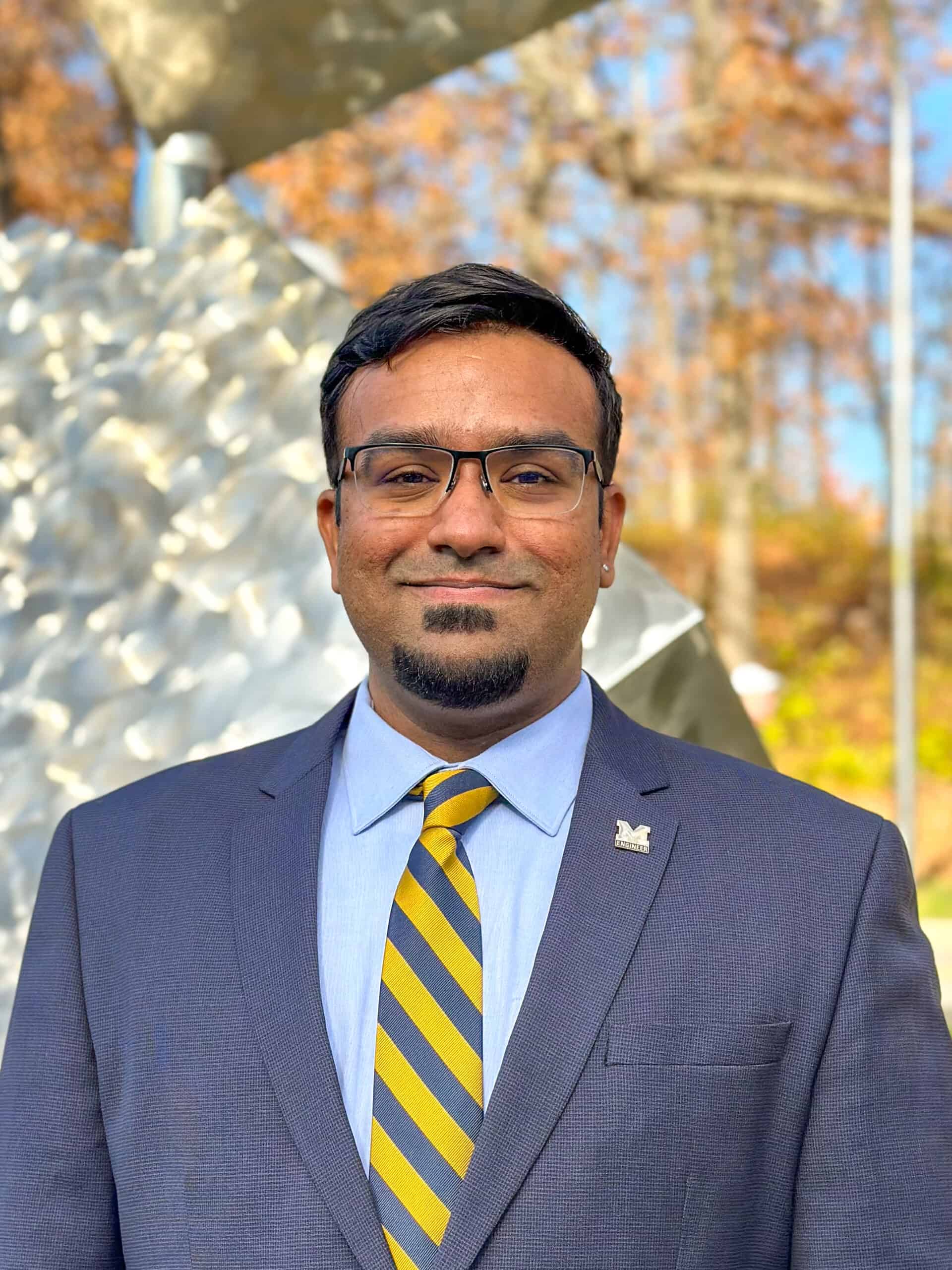
Varun began his career at General Motors Technical Centre India, focusing on automatic transmissions within the company’s Global Propulsion Systems division. His growing interest in hybrid and electric vehicle systems—and the opportunity to study through GM’s Technical Education Program—set him on a path toward graduate education at the University of Michigan.
For Varun, the decision to enroll was straightforward. The GAME program aligned with his professional experience, academic goals, and the program’s unique structure.
He shares, “Among the different programs that were available, the automotive and manufacturing engineering program was the best match for what I was looking for.”
This connection between professional relevance and academic flexibility became one of the defining strengths of his experience at Michigan.
As a full-time engineer balancing work and study, Varun benefitted from the program’s flexibility. “It required additional effort because you have to be the best at both school and at work,” Varun says. “But the program, the nature of the coursework, and the way you interact with your instructors support this arrangement.”
The program’s structure allowed Varun to integrate his learning directly into his day-to-day work at General Motors. Encouraging professors and managers created an environment where he could thrive.
Varun reflects on this experience: “When I was starting off with this program, it was overwhelming at times, but I had instructors who were very understanding. The deadlines were set with the expectation that full-time working professionals would also be part of this program. My manager was supportive and gave me flexibility in terms of attending classes, writing exams, and interacting with other industry professionals.”
When asked about his favorite class, Varun immediately recalled Modeling, Analysis and Control of Hybrid Vehicles. This course effectively combined theory and real-world application, leaving a lasting impression.
He shares, “The reason why I specifically liked this course so much is because the instructors were working professionals. We talked about how the concepts they taught were directly being implemented in their day-to-day jobs.”
He appreciated how the class bridged academic learning with real engineering challenges in the hybrid vehicle field.
“Since hybrids were of particular interest to me, we often discussed modeling practices and measures taken to ensure the function of hybrid modes, which we could actually see in the cars that are in production,” he says. “Having that close connection between classroom learning and what’s happening in the industry was really exciting.”
Varun quickly noticed that earning a master’s degree not only raised employers’ expectations of him but also opened the door to a wider range of opportunities.
“Yes, the expectations for a graduate student are more than what you can expect from an undergrad,” he says. “Because of the two years that you spend during your master’s, you learn a unique set of skills that industries are always looking for, especially when it comes to advanced automotive technologies.”
The GAME program’s specialized tracks, such as electrification and advanced materials, helped him stand out in a competitive field.
“The job roles you apply to are not generic, but more specialized,” he shares. “Earning a master’s degree definitely brings additional skills that make me more industry-ready.”
Varun encourages incoming students to approach the program with curiosity and a clear sense of purpose.
He reflects, “Starting off with your master’s program, you’ll experience a lot of autonomy and freedom when it comes to selecting courses or what you want to do with your degree. It’s important to have an understanding of what you’d like to achieve. Having that end goal really helps in selecting the best courses or joining student organizations that support your interests.”
He also highlights the value of the program’s interdisciplinary design. “The multidisciplinary part of the program is something unique. It’s not something you find in a lot of places, and it really helps in your overall growth and career.”
Today, Varun continues to apply the lessons he learned at Michigan in his role as Systems Engineer in Combustion and Thermal Management at Bosch. His journey from India to Ann Arbor demonstrates the transformative potential of the GAME program for engineers ready to shape the future of mobility.