
When Matt Pirone began his undergraduate journey in biomedical engineering, he envisioned a future in medicine, research, or health-focused engineering. But as he explored new disciplines and perspectives, his career trajectory shifted. In the University of Michigan’s Design Science program, he discovered his passion for human-centered design.
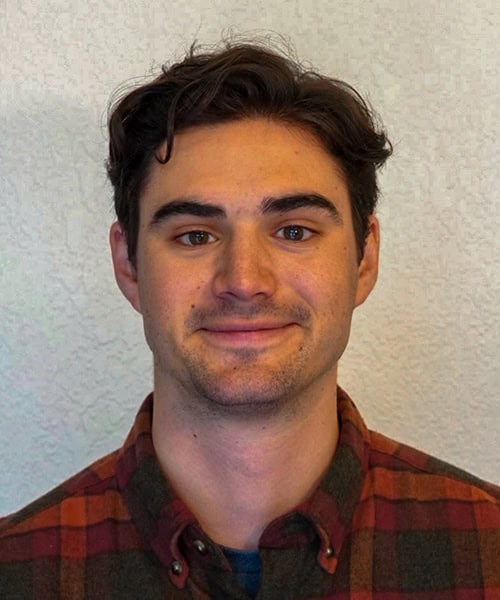
Matt started out in biomedical engineering at Michigan. He was drawn to the intersection of science, math, and the human body. “I was really into engineering science, a little bit of the medical aspects, and just driven by wanting to make improvements in people’s health,” he explained.
But as he explored medicine, lab work, public health, and psychology, he realized he was interested in more than just solutions. “I found that I was a lot more interested in the problems rather than the solutions,” he reflected. “You couldn’t really push back on ‘why are we doing this?’ Or ‘why are these the specifications or the requirements?’”
A pivotal moment came during his capstone project in the Global Health and Design Initiative. There, he was introduced to socially engaged design, an approach that emphasized discovery, exploration, and stakeholder perspectives. “That was the first concept in my engineering journey that I really fell in love with,” he said. “It focused on all the right aspects of discovery and exploration and really understanding the why and the purpose and the values behind it.”
After graduation, Matt worked at Michigan’s Center for Socially Engaged Design, where he dove deeper into human-centered problem solving. When he returned for graduate school, he began with a mechanical engineering master’s degree but quickly realized he wanted something broader.
“I discovered the Design Science program and decided to tack that on to my grad studies as well,” he shared. “Something that the Design Science program offered me was a lot of flexibility to explore my passions and interests. The program can really be whatever you make it.”
Through the program, Matt blended courses in engineering, sustainability, psychology, and business. He especially valued being pushed outside his core field: “My capstone design for design science actually was through a program out of the School of Information, which I thought was really cool—that I could do a capstone in a different school from my degree.”
Equally meaningful was the community of like-minded but diverse peers. “Everybody thinks similarly, and it just creates a really nice, inspiring environment to learn from others, collaborate, and bounce ideas off each other,” he recalled.
Today, Matt is a Design Thinking Analyst at Sherwin-Williams, following a similar role at Ford. His work focuses on coaching, facilitation, and strategy—helping teams across the company adopt more innovative, human-centered approaches.
“We kind of bridge the gap between teams and work with others across the company who are trying to work in a more human-centered way,” he said. “It’s a lot of coaching, a lot of facilitation, a lot of strategy. And something that I started to learn in the Design Science program was community building—how to create safe spaces for people to learn from each other and share their learnings.”
These roles weren’t ones Matt even knew existed as an undergraduate. “I don’t think I would have gotten these roles without this degree and my work with the Center for Socially Engaged Design,” he said. “It all builds on each other, and I’ve definitely pulled it together in a way that works for me.”
For Matt, the greatest strength of the Design Science program is its adaptability. “You can really tailor the program to your needs, whether that’s deep diving as much as allowed or spreading your chips out as much as you are allowed,” he explained.
His advice to incoming students: lean into the experience. “As much as you put into it, you will get out,” he said. “Every course involves a project—group work, presentations, reports. It’s all very representative of work you actually do in the real world. So just try to really dive into it and push the boundaries of what you’re comfortable with.”
Looking back, Matt has no regrets about his unconventional path. “Some people ask me if I feel guilty about doing a biomedical engineering degree and then never being a biomedical engineer,” he said with a smile. “And I always just say no, because each step of my journey is what got me to the next step. I wouldn’t have found socially engaged design if it wasn’t for biomedical engineering. And if I didn’t find socially engaged design, I wouldn’t have found the Design Science program.”